The Legacy of Mrs Heelis
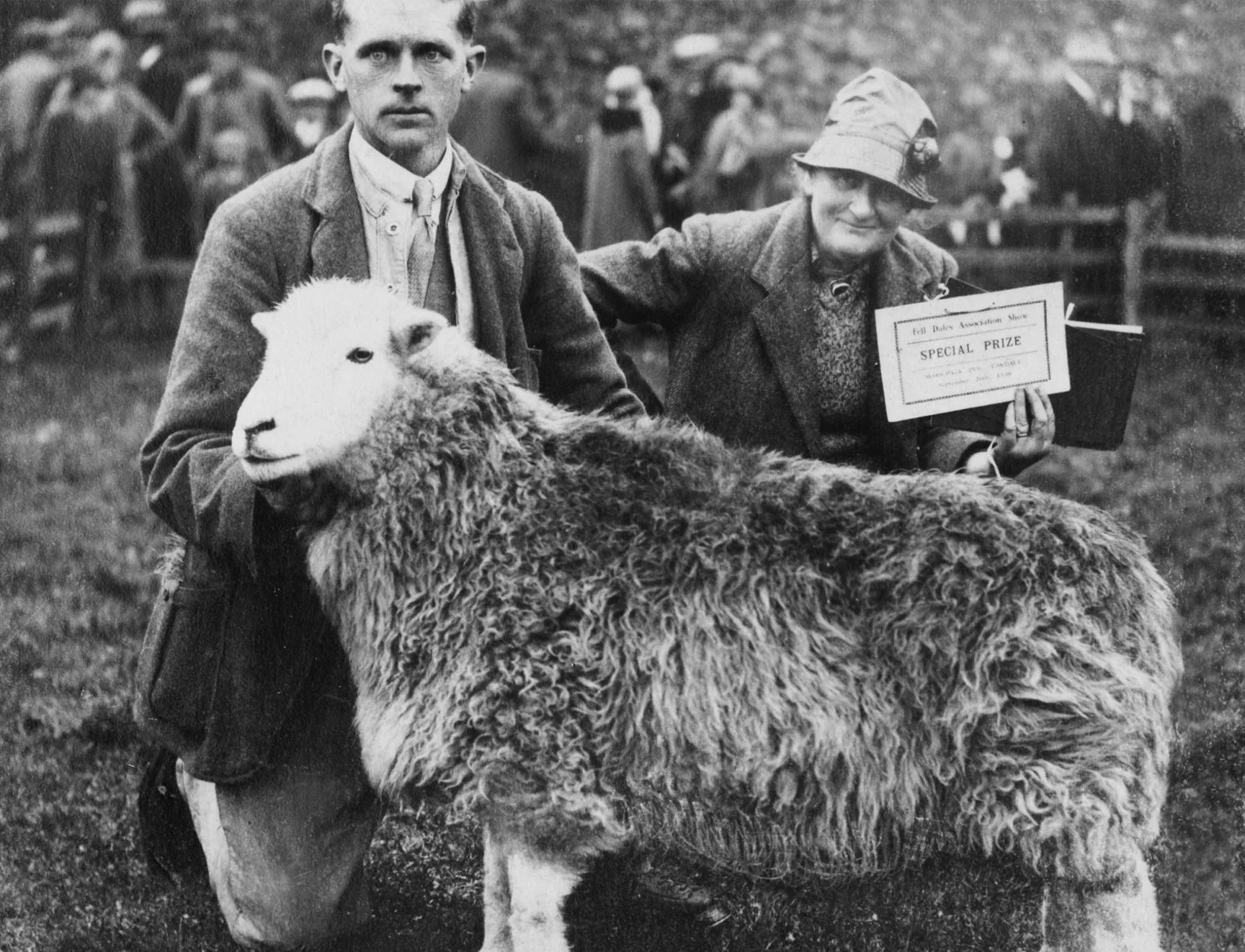
Beatrix with her shepherd Tom Storey, 1930
“Of all the writers associated with the Lake District, Beatrix Potter (or Mrs Heelis, as she was known for her farming life here) is the one that I love the most.” —James Rebanks
When I was a child our public library’s bookmobile visited my separate school once a week. On one visit I picked out a little book, made for little hands, to take home. The librarian scolded me for choosing what she called a “baby book.” I was six years old and too shy to tell her that it was for the beautiful illustrations alone—charming and naturalistic— that I wanted the book. Consumed by shame I put it back on the shelf.
Some time later, an elderly neighbour gave me a copy of the same little book, sans cover. It must have belonged to her children. My mother sent it away to a bookbinder to have a new cover attached. That little book is still in my collection.
That “baby book,” the little book, made for little hands, is The Tale of Peter Rabbit, the very first of a long series of books written and illustrated by Beatrix Potter.
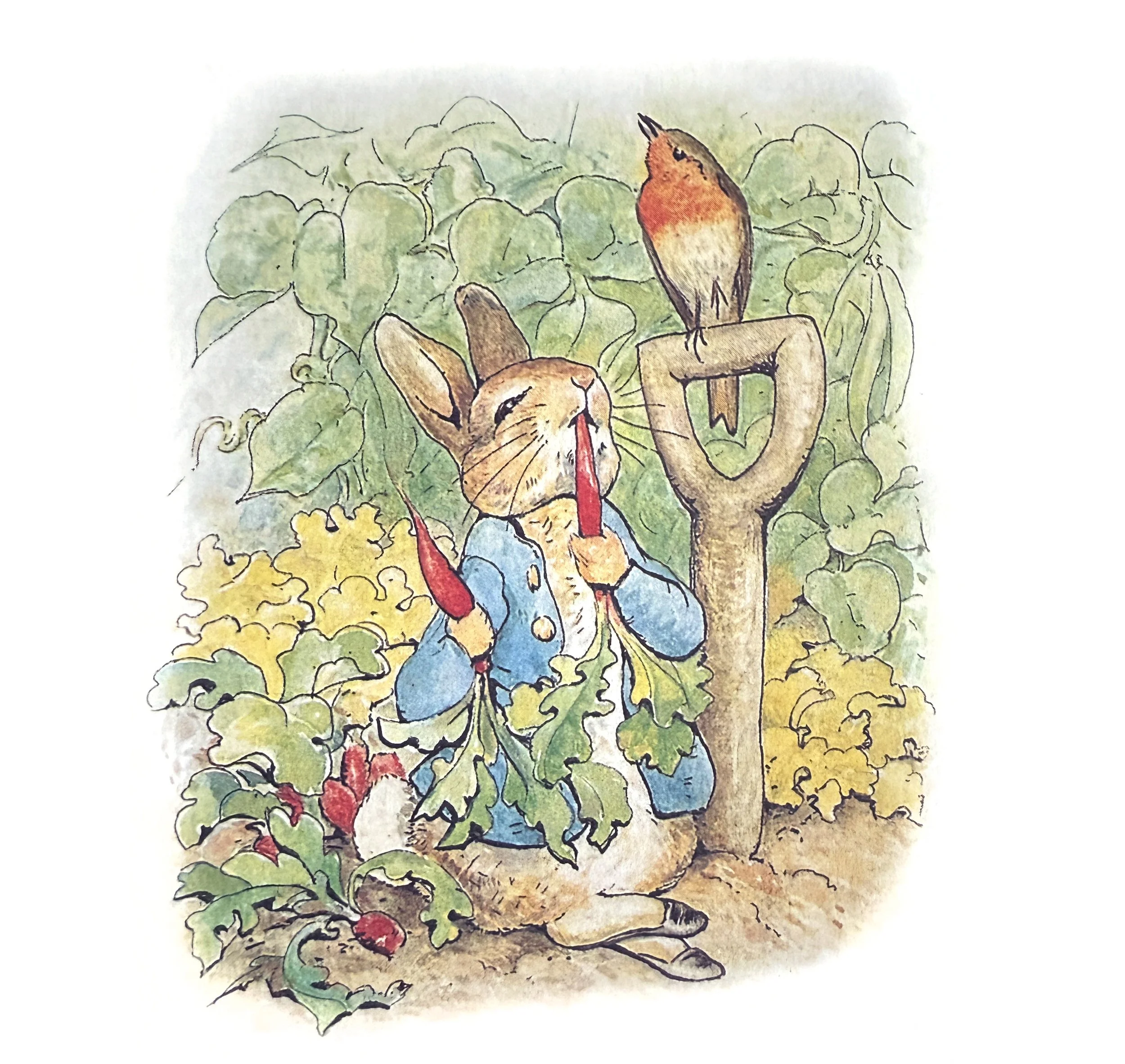
“First he ate some lettuces and some French beans; and then he ate some radishes.” The Tale of Peter Rabbit, 1902
Beatrix Potter was born in London in 1866, the daughter of a barrister and his wife, who inherited wealth from the cotton industry. Cared for by nannies and educated by governesses, she had a lonely childhood without friends of her own age. Her younger brother, Bertram, was her only companion and when he went away to school her life was lonelier still.
On summer holidays the family spent time with relatives or rented homes in Scotland and the Lake District. Both children were fascinated by natural history and Beatrix and her brother roamed the countryside, collecting and sketching. She and Bertram kept small mammals, birds, reptiles, and insects as pets and Beatrix, a keen observer of nature, drew and painted them. Largely self-taught, she absorbed artistic influences from books and from the art galleries of London and soon became an accomplished artist.
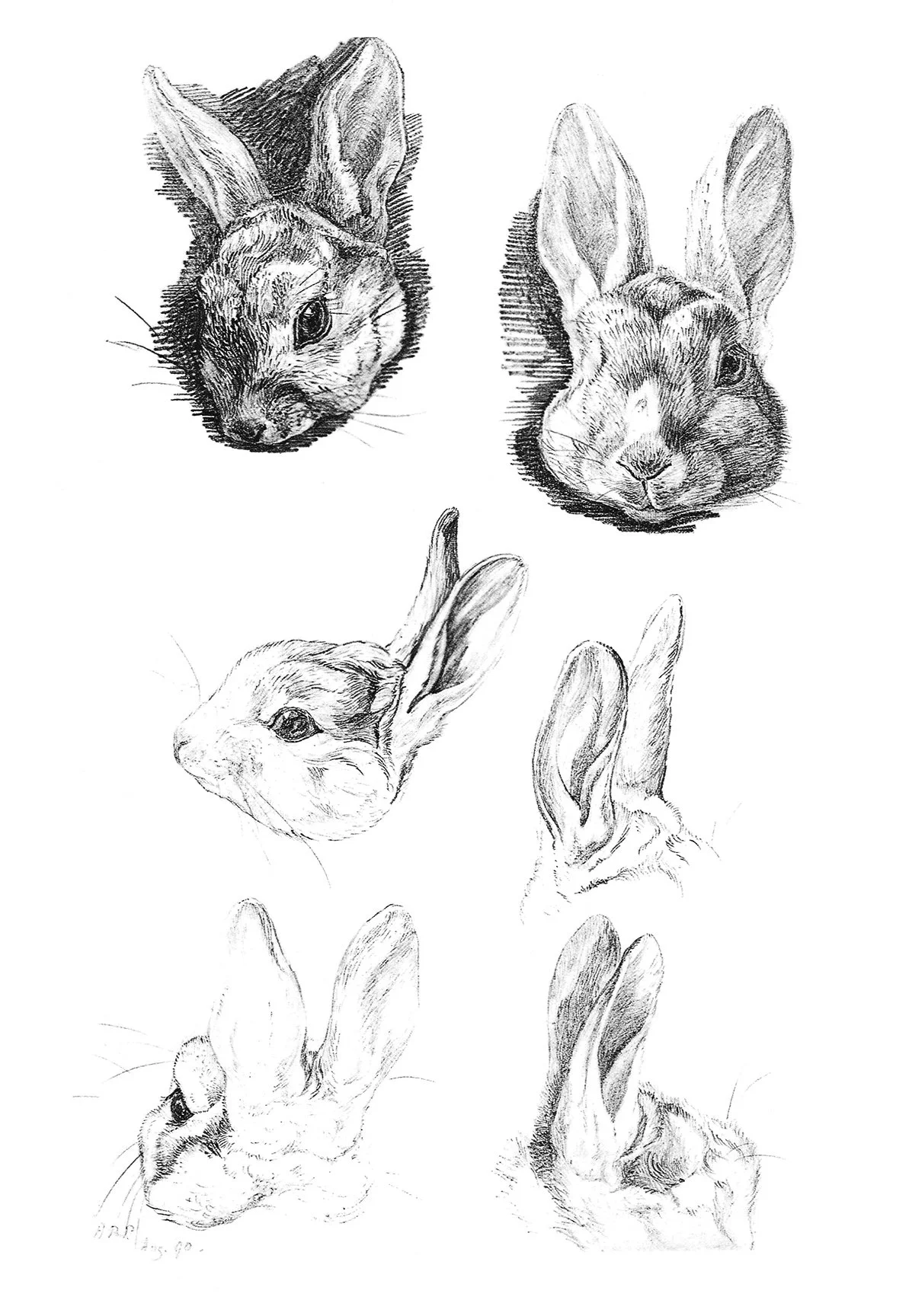
Beatrix’s pet rabbit Benjamin Bouncer, 1890
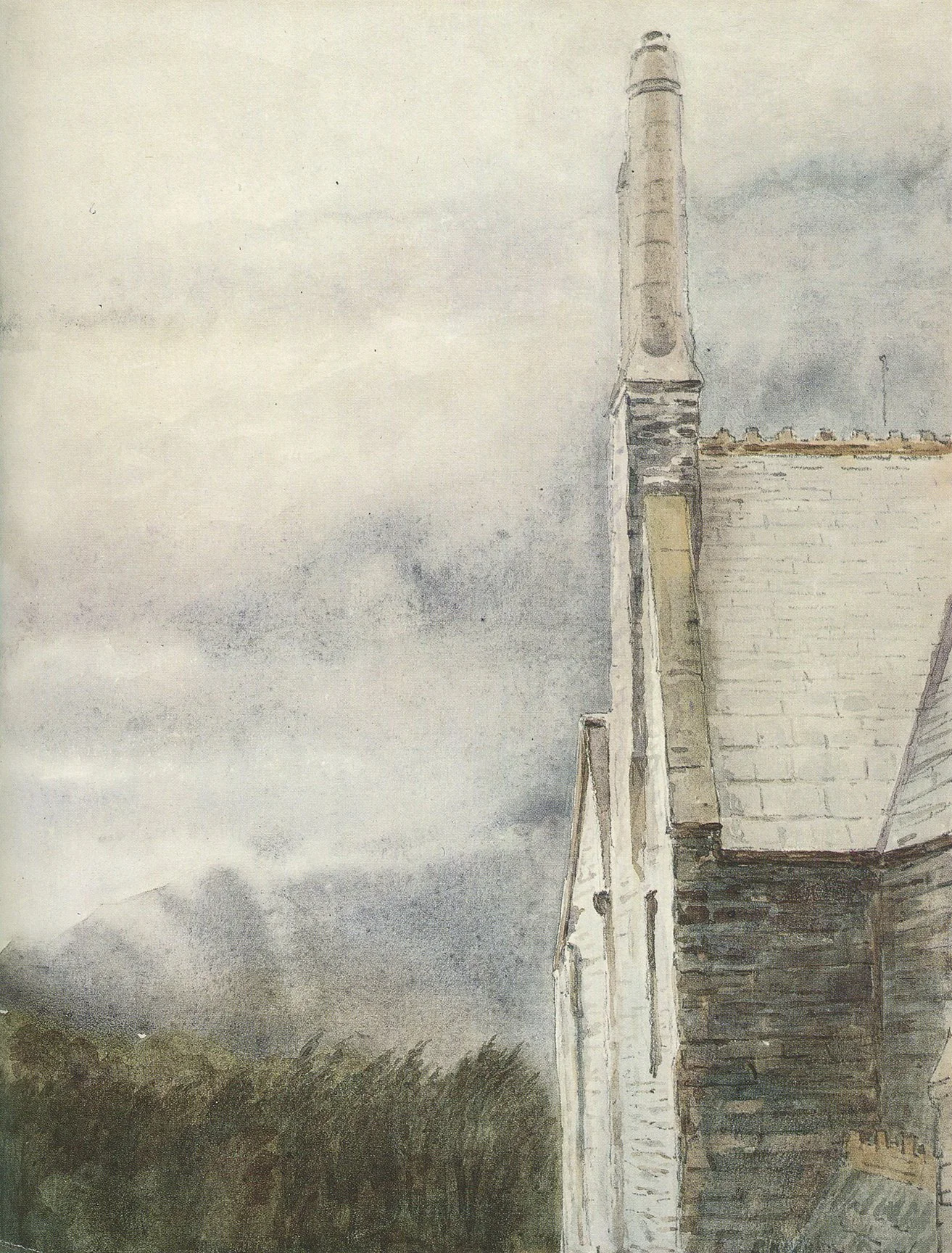
Lingholm, Derwentwater, 1898
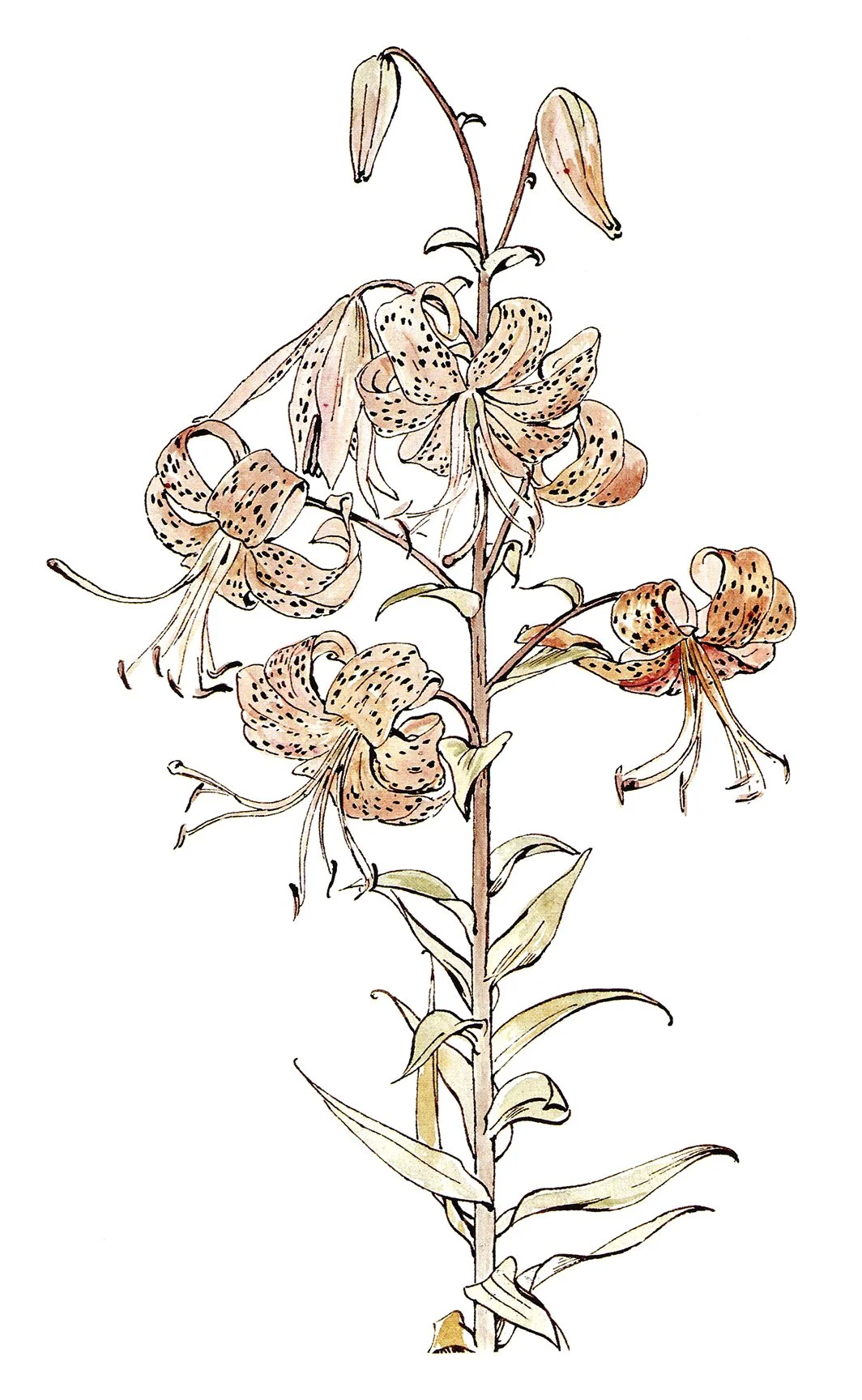
Turk’s-cap lily, 1903
On the family’s holidays to Scotland in her early twenties Beatrix began to study and paint fungi. With the instruction and encouragement of Scottish mycologist Charles McIntosh, by her late twenties she had, according to Anne Stevenson Hobbs, “the skill of a fully-fledged scientific illustrator.” She also conducted experiments into the growth and cultivation of fungi and in 1897 submitted a scientific paper entitled “On the germination of the spores of Agaricineae” to the Linnean Society of London.
George Massee, of the Royal Botanic Gardens in Kew, read her paper at the society. Massee, according to mycologist Roy Watling, “realised that Beatrix Potter was a wonderful illustrator. She illustrated the fungi precisely, not something that she would have copied out of a book. She illustrated what she saw in nature.” While the paper was well received, Beatrix never carried out the additional changes required for publication and withdrew it. She was not allowed to become a member or Fellow of the society because she was a woman.
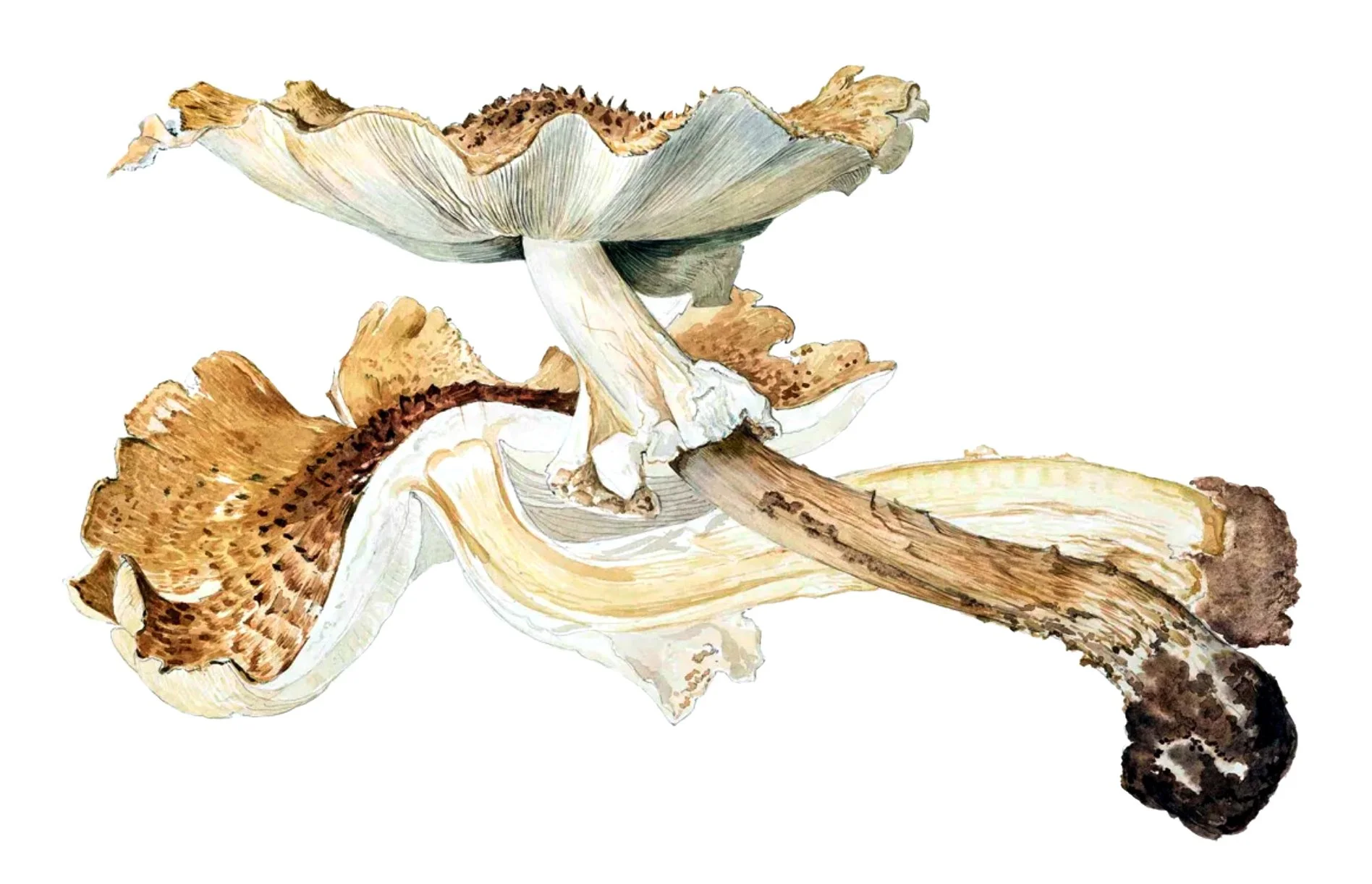
Lepiota friessi, 1895
“Beatrix Potter was a wonderful illustrator....She illustrated what she saw in nature.” —Roy Watling
The Linnean Society’s loss was publishing’s gain.
Though Beatrix had experience with publishers before, having illustrated greeting cards for Hildesheimer & Faulkner, The Tale of Peter Rabbit was her first book. The story had its origin in a letter that she wrote and illustrated for the eldest child of her last governess. Peter Rabbit was rejected by half a dozen publishers and so, in 1901, Beatrix had her little book printed herself. After the initial modest success of the self-published black and white book, Frederick Warne & Co. agreed to take it on, provided that Beatrix supply full-colour illustrations. In 1902 the first commercial edition was published and sold 50,000 copies in just over a year.
Norman Warne, the youngest of the Warne brothers of Frederick Warne & Co., shepherded Beatrix through the publishing process of Peter and her subsequent books. He became her editor and advisor and they fell in love.
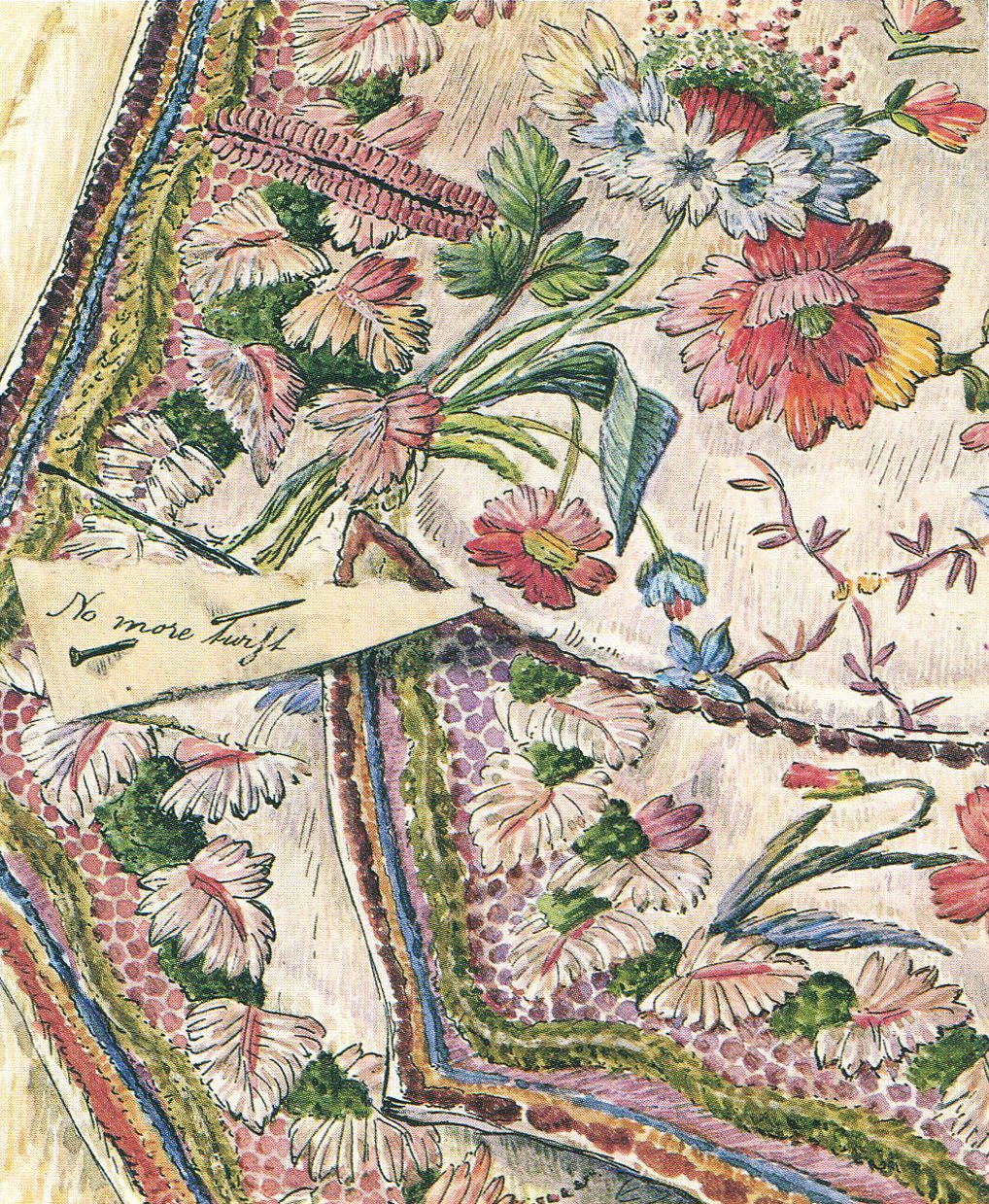
“Everything was finished except just one single cherry-coloured button-hole, and where that button-hole was wanting there was pinned a scrap of paper with these words – in little teeny weeny writing – “No more twist.”” The Tailor of Gloucester, 1903
It was normal at that time for unmarried women to live in the family home through adulthood. They often acted as housekeeper, and companion or nursemaid to their parents. Biographer Linda Lear hints at the burden of Beatrix’s daughterly duties when she says “it is likely that her parents were again objecting to the time that she was spending on her books.”
In apology to Norman after turning down his invitation to sketch a doll’s house at the residence of his brother, Beatrix writes “I hardly ever go out, and my mother is so “exacting” I had not enough spirit to say anything about it. I have felt vexed with myself since, but I did not know what to do. It does wear a person out.”
In July of 1905, when Norman was 37 and Beatrix almost 39, he proposed marriage by letter and she accepted. Her parents opposed the match and, forgetting the source of their own wealth in the cotton industry, considered Norman to be their social inferior, having come “from trade.” Beatrix was torn between her love for Norman and her duty to her parents and agreed to keep their engagement secret but exactly a month after Norman’s proposal he died of pernicious anemia brought on by lymphatic leukaemia. Beatrix was inconsolable.
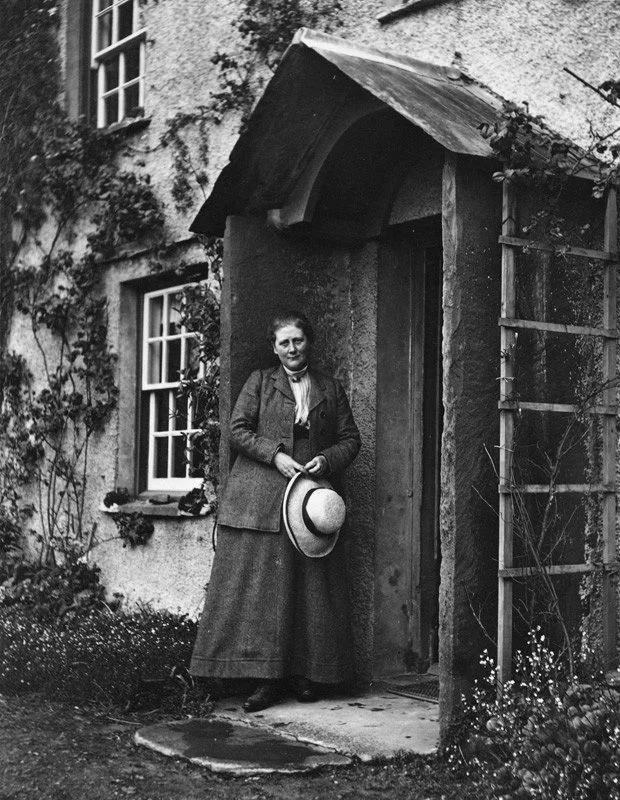
Beatrix in the porch of Hill Top, 1913
Beatrix Potter had fallen in love with the Lake District and in November of 1905 she used the royalties from her best-selling books to buy a farm, Hill Top at Near Sawrey. She divided her time between London and Hill Top and threw herself into farming, acquiring livestock for the farm as well as 30 Herdwick sheep, the hardy breed indigenous to the fells (hills). She bought a second farm in 1909.
From the beginning local solicitor William Heelis had looked after her land purchases and supervised building work for her. They grew closer and William asked Beatrix to marry him. Once again her parents objected but she finally persuaded them to give their blessing. William and Beatrix were married in October of 1913.
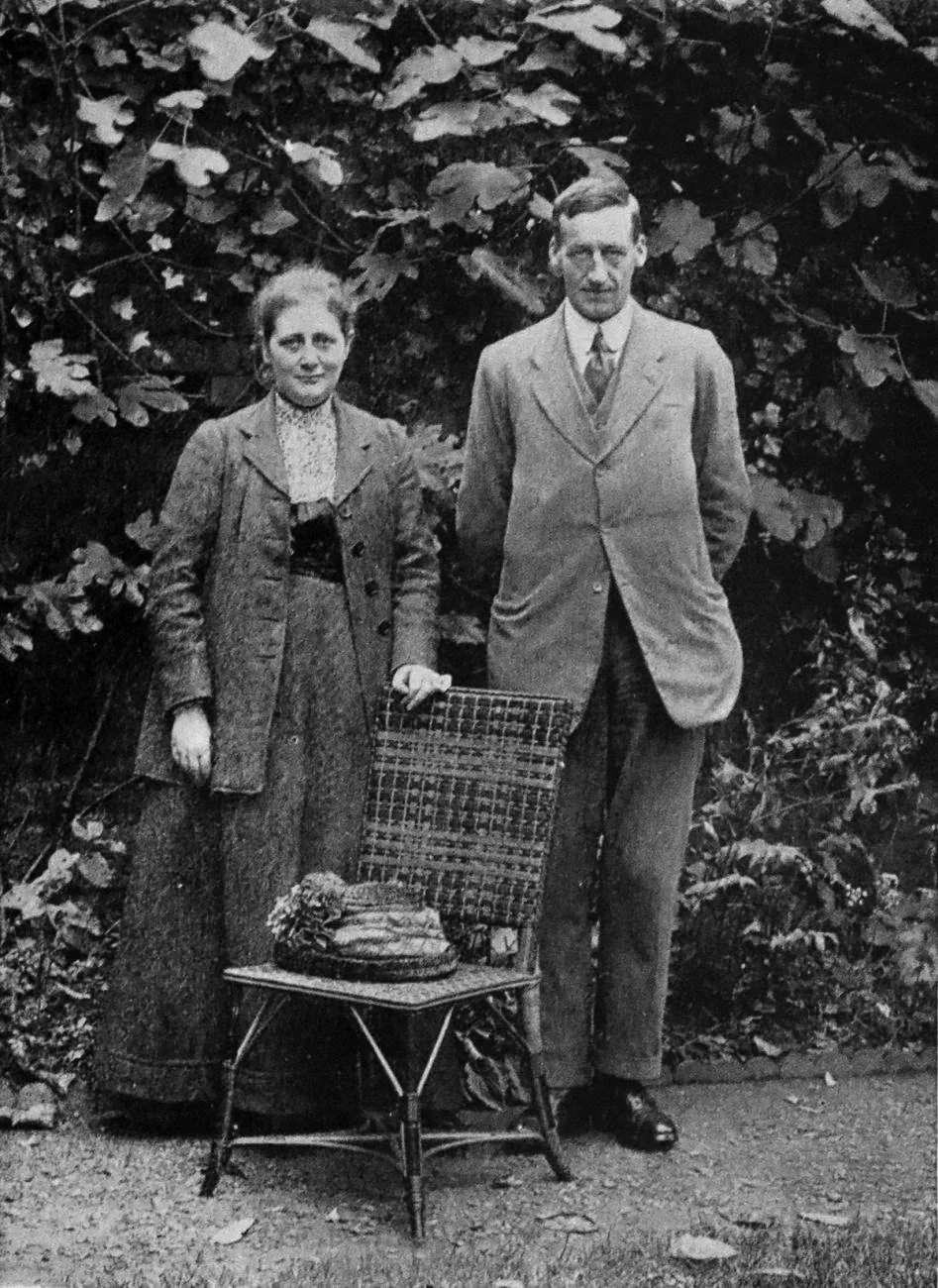
Mr and Mrs Heelis, 1913
The creator of Peter Rabbit was a one-woman industry. Peter and company launched dolls, board games, wallpaper, and china. After her purchase of Hill Top Beatrix continued to write and illustrate her little books, inspired by the people and landscapes of the Lake District, but after her marriage to William she produced only four more books. She suffered from eye strain and her farming commitments began to take precedence over publishing.
Beatrix had become a strong supporter of the National Trust after meeting Canon Hardwicke Rawnsley, one of its co-founders, on her very first visit to the Lake District. She was very interested in the preservation of the land and way of life in the region. With William, Beatrix bought another farm, then another, fifteen in all, including Troutbeck Park in 1923 and the Monk Coniston Estate in 1930, snatching these properties from the jaws of greedy developers.
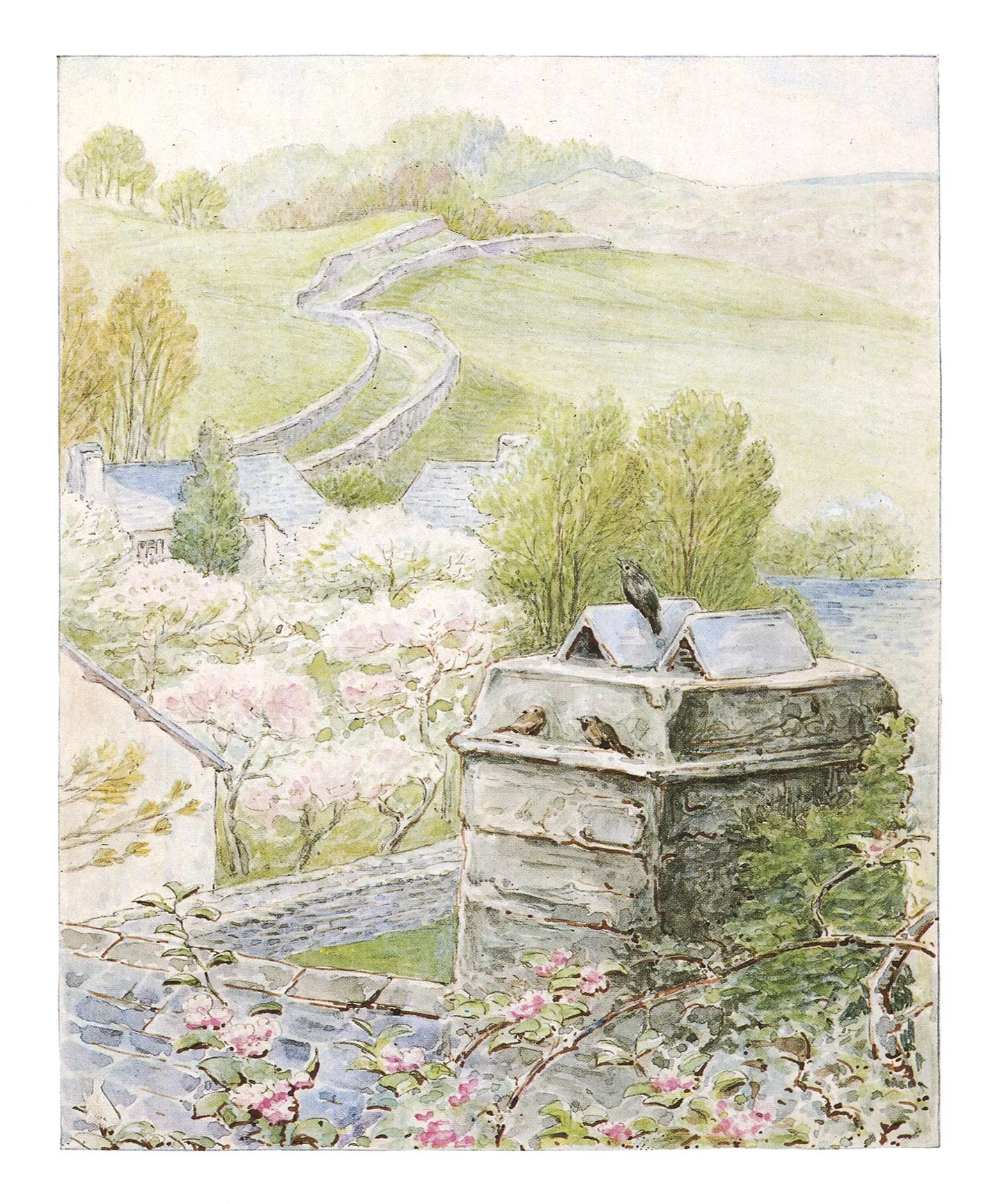
“The chimney stack stood up above the roof like a little stone tower, and the daylight shone down from the top, under the slanting slates that kept out the rain.” A scene from a second floor window of Hill Top for The Tale of Samuel Whiskers, 1908
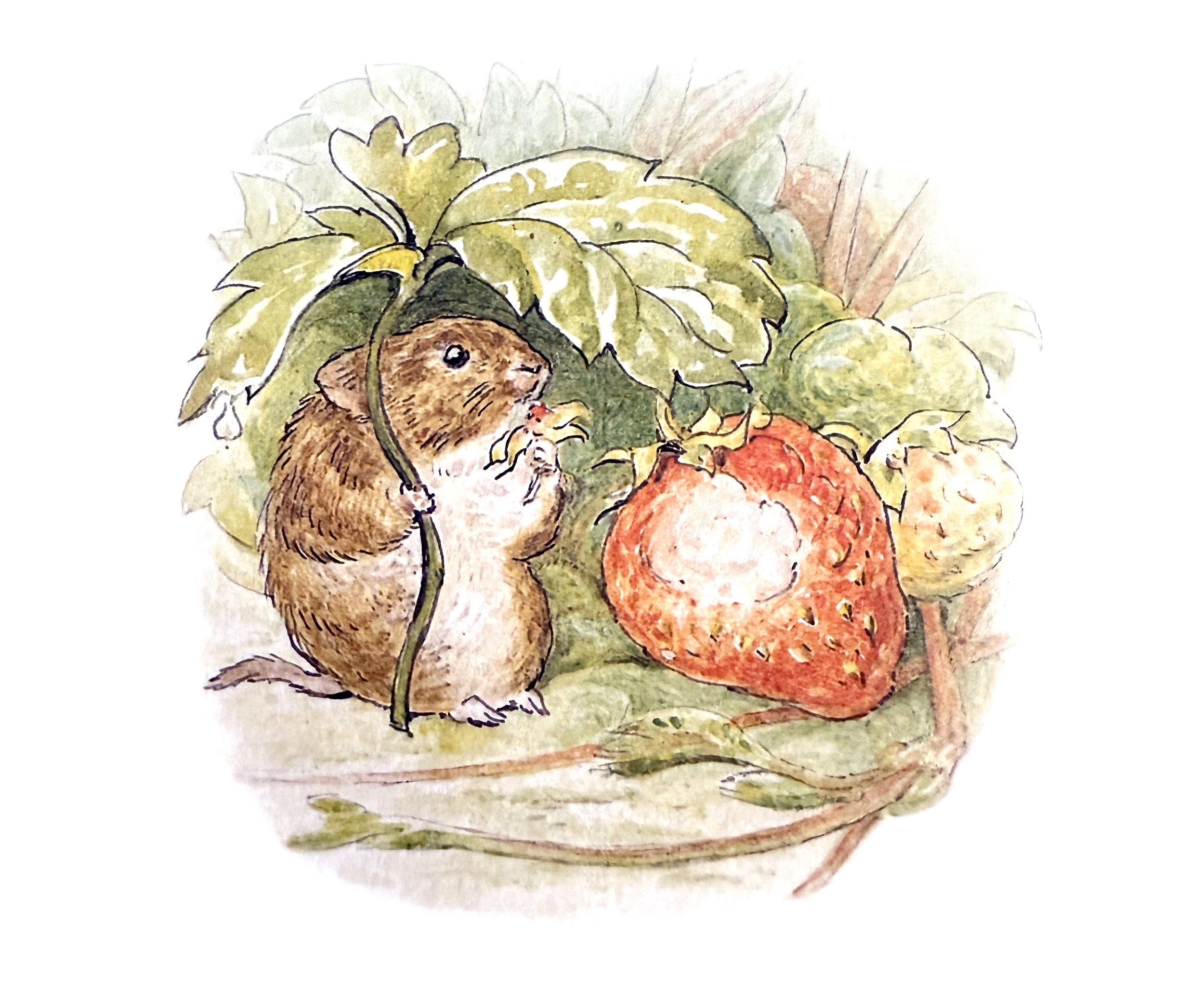
“One place suits one person, another place suits another person. For my part, I prefer to live in the country, like Timmie Willie.” The Tale of Johnny Town-Mouse, 1918
She became a top breeder of Herdwicks, and with the advice and management of her shepherd, Tom Storey, raised prize-winning ewes. In 1943, Beatrix was elected President of the Herdwick Sheep Breeders Association but she passed away before she could assume her role. She would have been the first female president of the association.
In her will Beatrix stipulated that all her property should go to William for his lifetime but that after his death everything, all 4,000 acres of land, including the farms and cottages on them, should go to the National Trust. Per her instructions, the farms and cottages were to be let at moderate rates, and the flocks on the fell farms should continue to be of the pure Herdwick breed.
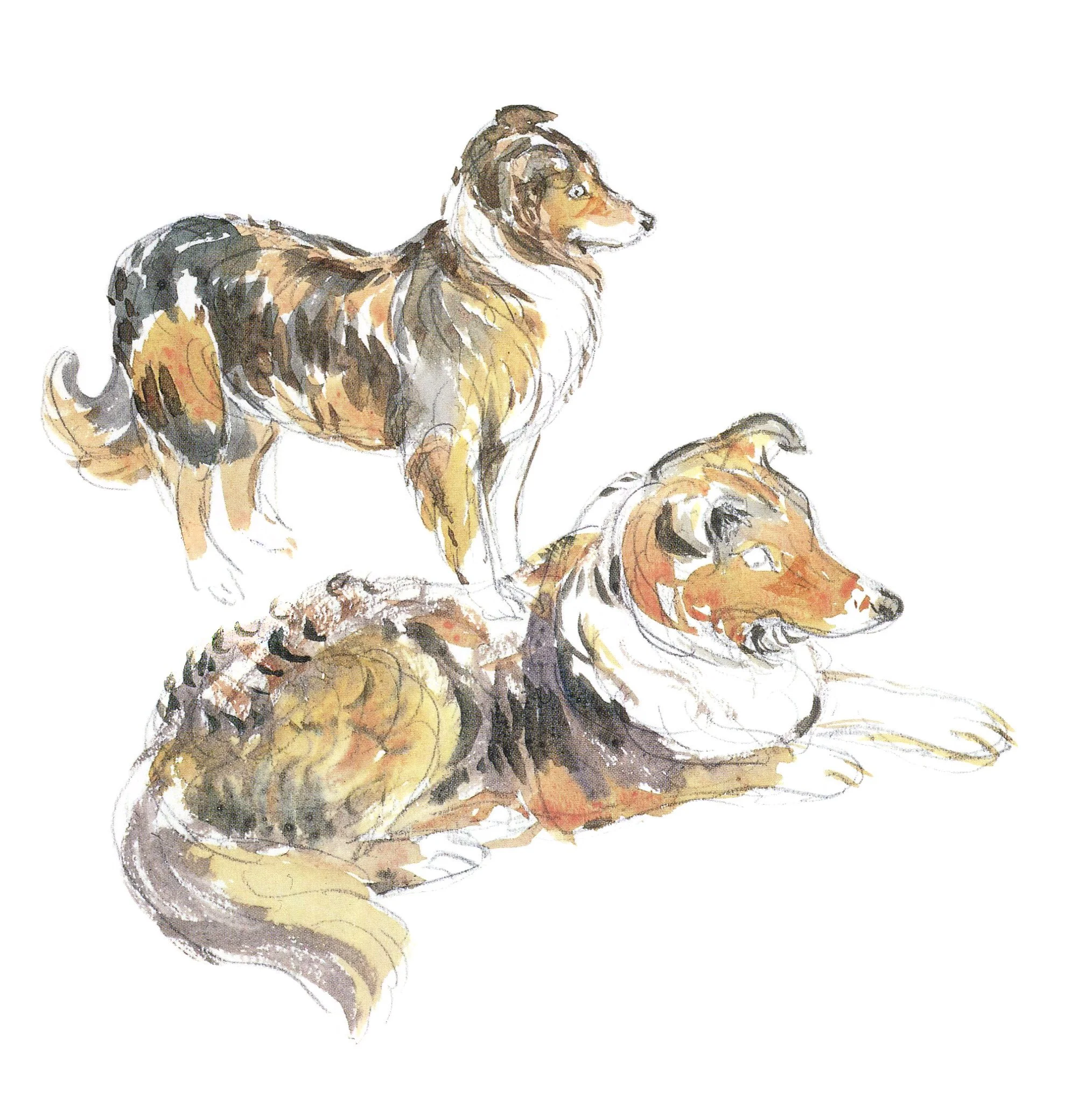
Kep, Beatrix’s favourite collie, 1907
In his book The Shepherd's Life: A Tale of the Lake District Herdwick shepherd and author James Rebanks pays tribute to Beatrix Potter:
“Of all the writers associated with the Lake District, Beatrix Potter (or Mrs Heelis, as she was known for her farming life here) is the one that I love the most. She had the utmost respect for the shepherds of the Lake District...
Her will is a remarkable document for someone who will always be known for her children’s books. It is not really about the books, but is instead full of concern for her legacy of farms, the ongoing care and respect of her tenants and the future of the fell-farming way of life.”
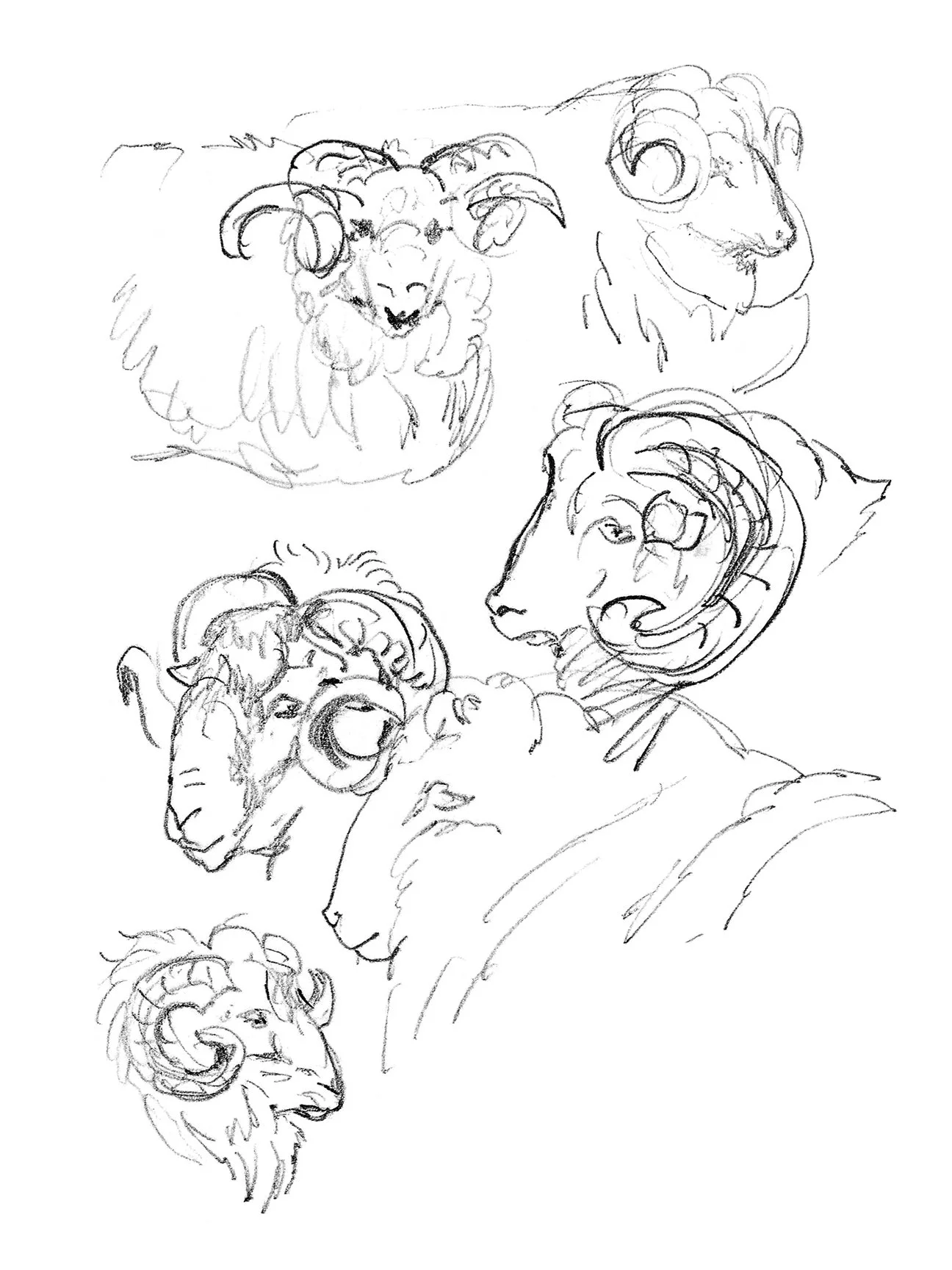
Herdwick rams, n.d.
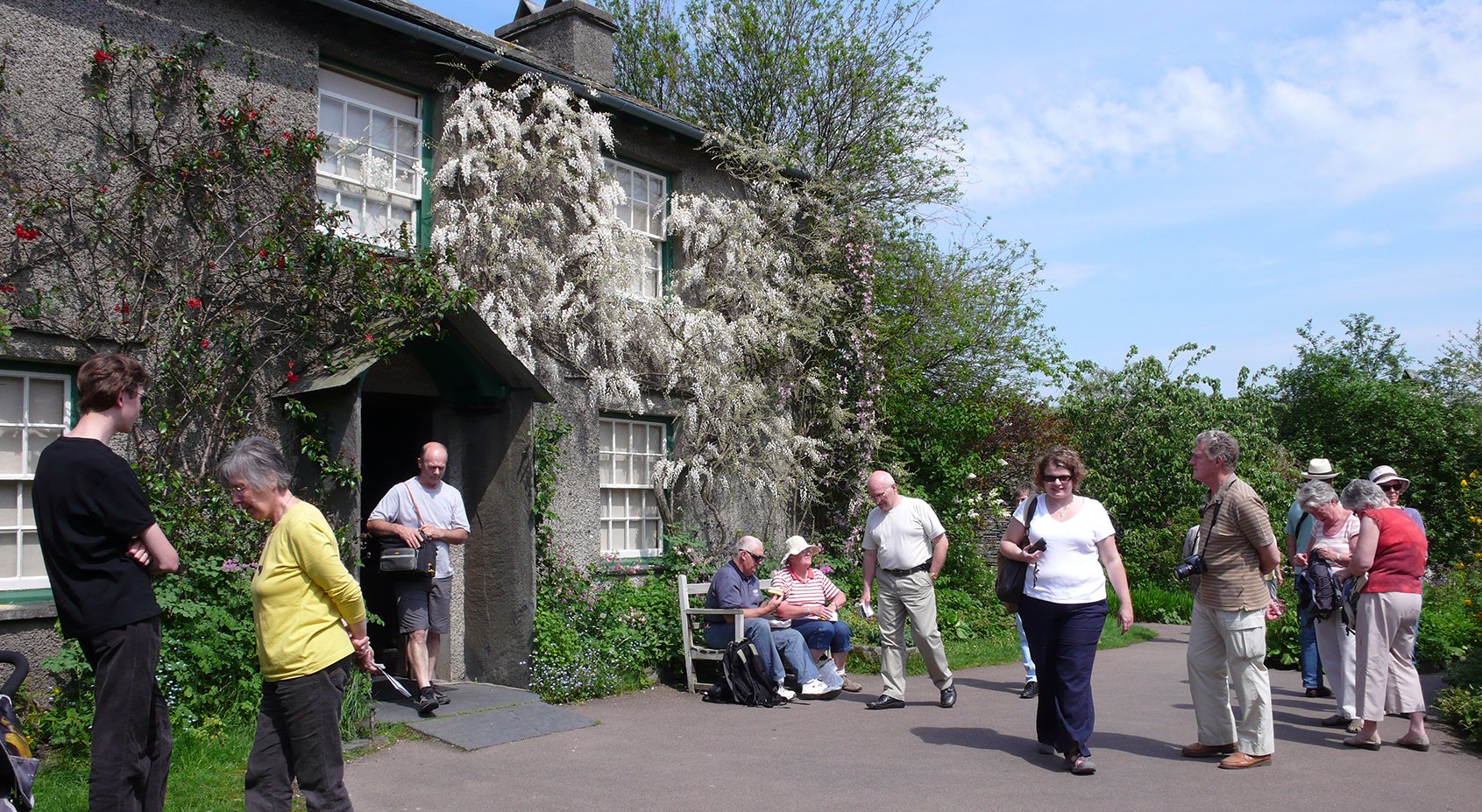
Tourists visit Hill Top.
Sources:
Anne Stevenson Hobbs. Beatrix Potter’s Art. Frederick Warne, 2004.
Linda Lear. Beatrix Potter: A Life in Nature. Allen Lane, 2007.
James Rebanks. The Shepherd’s Life: A Tale of the Lake District. Allen Lane, 2015.
Judy Taylor. Beatrix Potter and Hilltop. The National Trust, 2003.
Hazel Gatford. Beatrix Potter: Her Art and Inspiration. The National Trust, 2004.
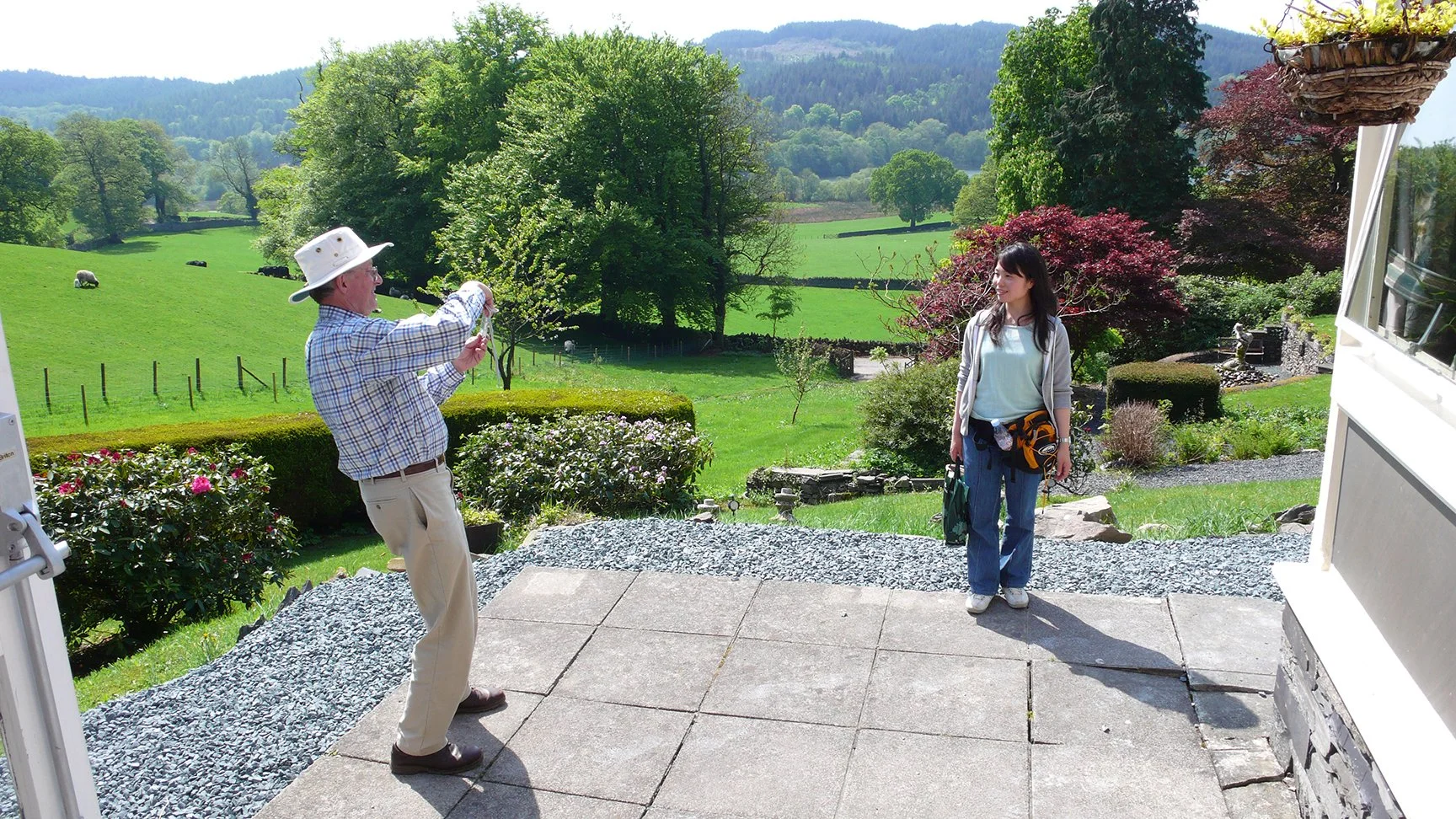
Outside a Near Sawrey tea room. A tourist taking a picture of a tourist taking a picture of a tourist. Like Anne of Green Gables in Canada, Potter and Hill Top are very popular with Japanese tourists. The National Trust produces Hill Top brochures and guidebooks in Japanese.
Travel YouTubers Kirsten and Joerg visit Yew Tree Farm (Monk Coniston Estate) in the Lake District, bought by Beatrix in 1930. The farm stood in for Hill Top Farm in the film Miss Potter.
Miss Potter, starring Renée Zellweger, Ewan McGregor, Lloyd Owen, Bill Paterson, Barbara Flynn, and Emily Watson.